The Challenge
The Original Design Brief:
I was given a design brief from Bumble centered on boosting premium subscriptions through hyper-local notifications. The concept proposed sending alerts, across mobile, desktop, and wearable devices, when a potential match was within 0.5 kilometers, powered by enhanced location services.
The underlying assumption was straightforward: if users knew that someone attractive or interesting was nearby, they would feel more compelled to engage and perhaps subscribe to unlock that information.
However, what the brief lacked was clarity on the interaction itself, how users would move beyond the initial alert, what lasting value this experience would provide, and how it could feel authentic and meaningful rather than intrusive.
Reframing the Problem:
While the original brief focused narrowly on location-based notifications to drive subscriptions, I reframed the challenge around a deeper question: How can Bumble create more natural, authentic opportunities for people to connect in real time? Instead of simply alerting users that someone is nearby, the goal became fostering meaningful interactions that feel personal, engaging, and non-intrusive.
The Solution: Bumble Story:
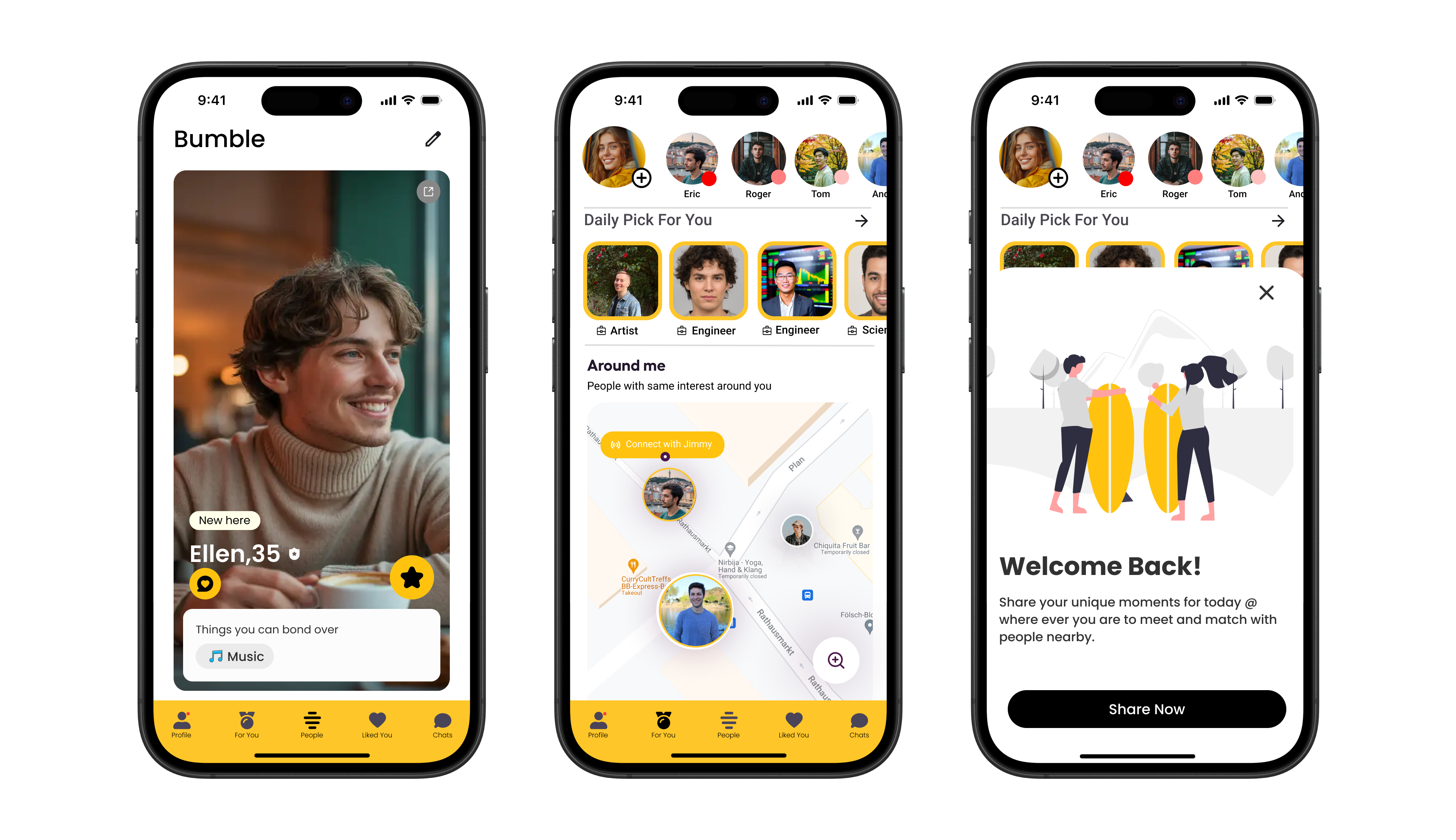
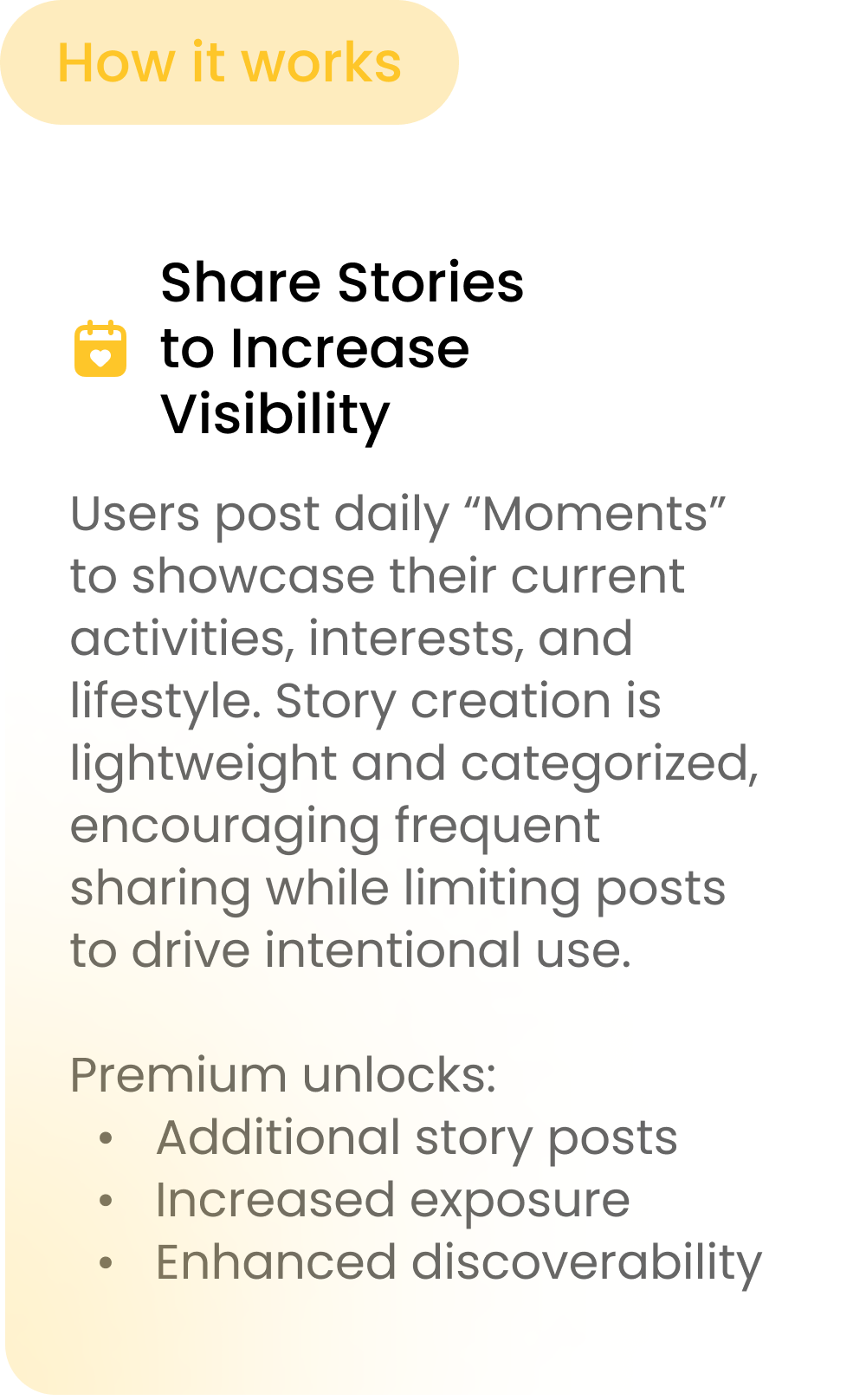
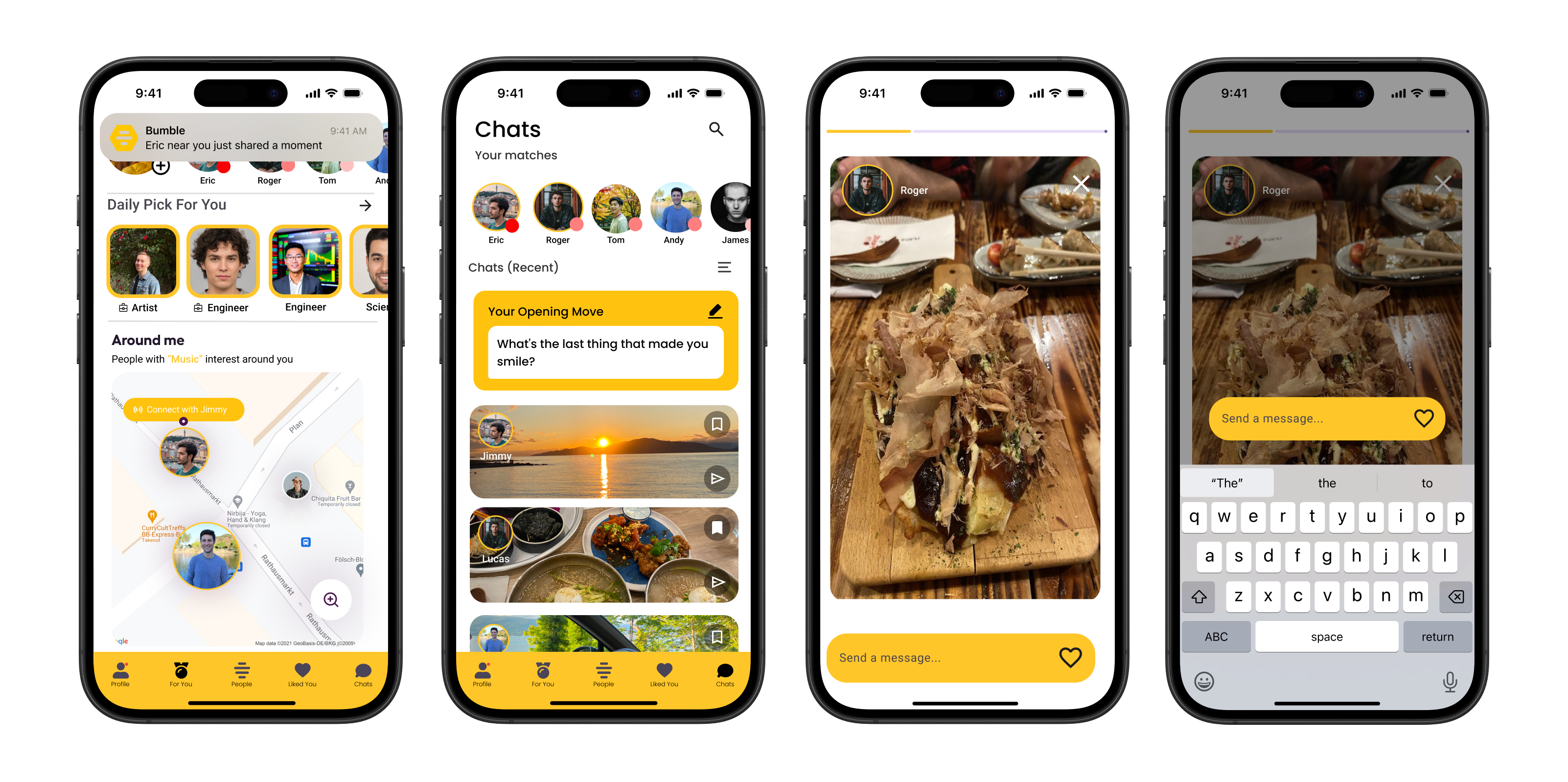
From this reframing, I developed Bumble Story, a feature that allows users to share short, everyday stories within the app. Rather than a blunt location ping, Bumble Story notifies users when someone nearby has recently posted, inviting them to explore stories and decide if they’d like to start a conversation. This shifts the experience from passive alerts to active discovery, giving users richer context about who they might connect with.
Why It’s Helpful:
Bumble Story lowers the barrier to starting conversations by letting users learn more about potential matches through their authentic, real-life moments. It transforms “someone is near you” into “someone nearby is living a moment you might want to share.” This creates a stronger emotional hook, encourages organic conversation starters, and builds trust by showcasing personality beyond static profiles.
The Goal:
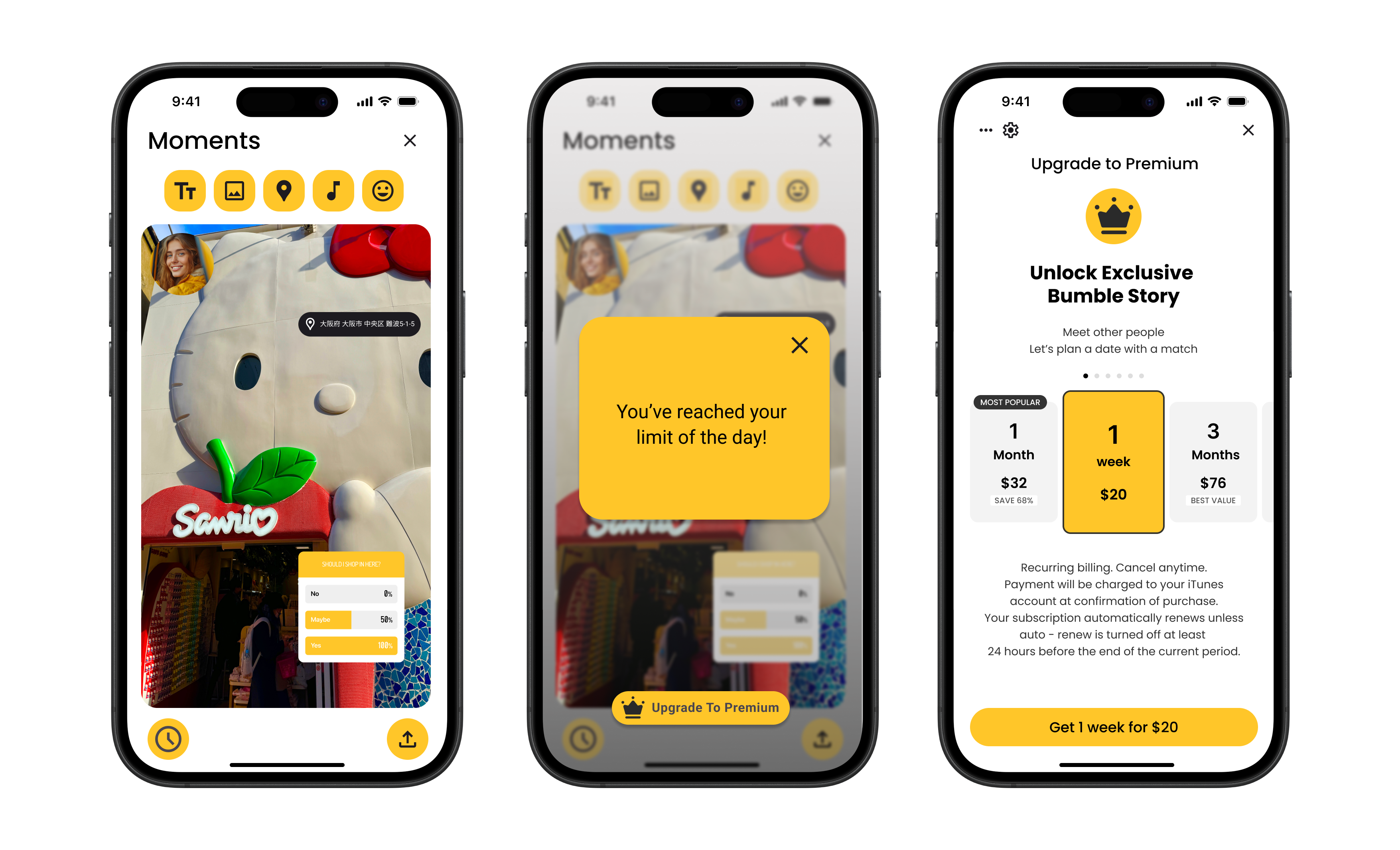
The ultimate goal of Bumble Story is to make interactions feel more genuine and engaging while aligning with Bumble’s mission of empowering people to connect with confidence. By offering a more context-driven way to discover and interact, the feature not only enhances user experience but also strengthens reasons for users to stay active and consider premium features.
Design Process
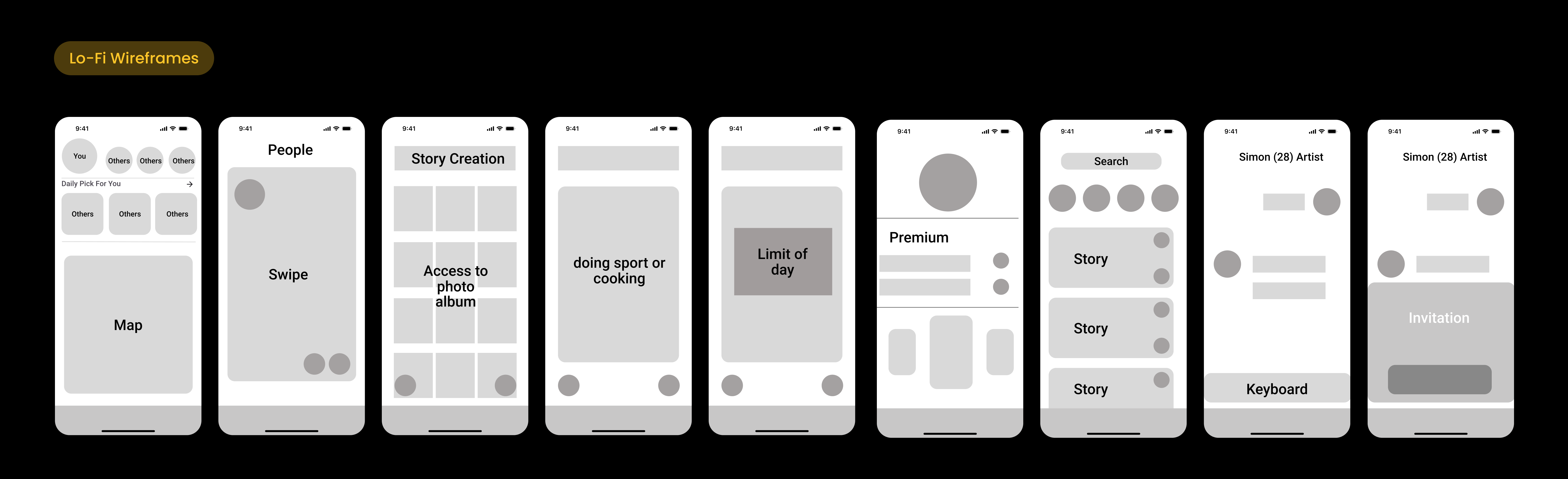
Low-fidelity Wireframe
I designed low-fidelity wireframes to outline the structure and user flow of Bumble Events across mobile, desktop, and watch platforms. These early explorations allowed me to quickly test interaction patterns, screen transitions, and content hierarchy before moving into higher-fidelity visual design.
Final Outcome
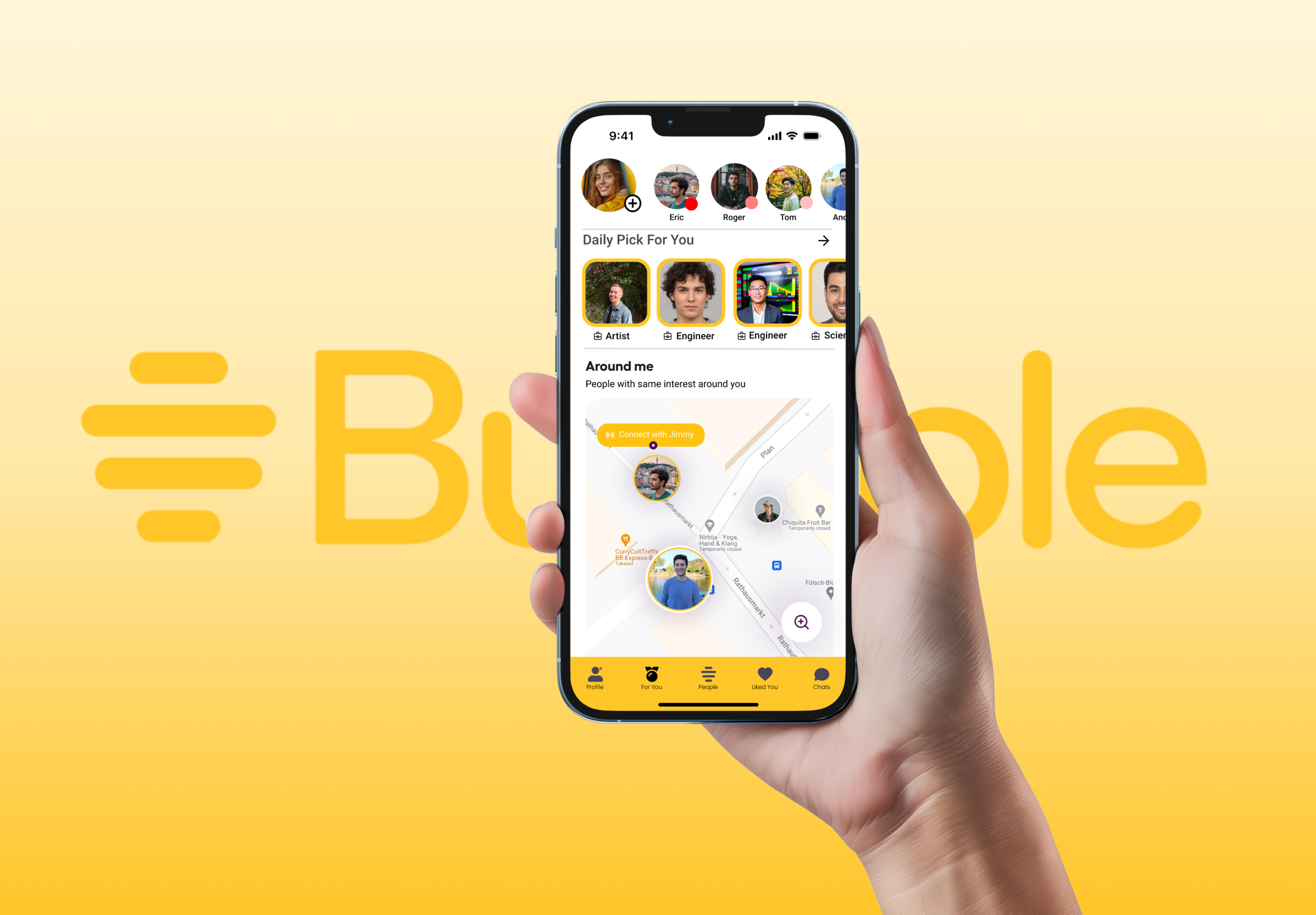
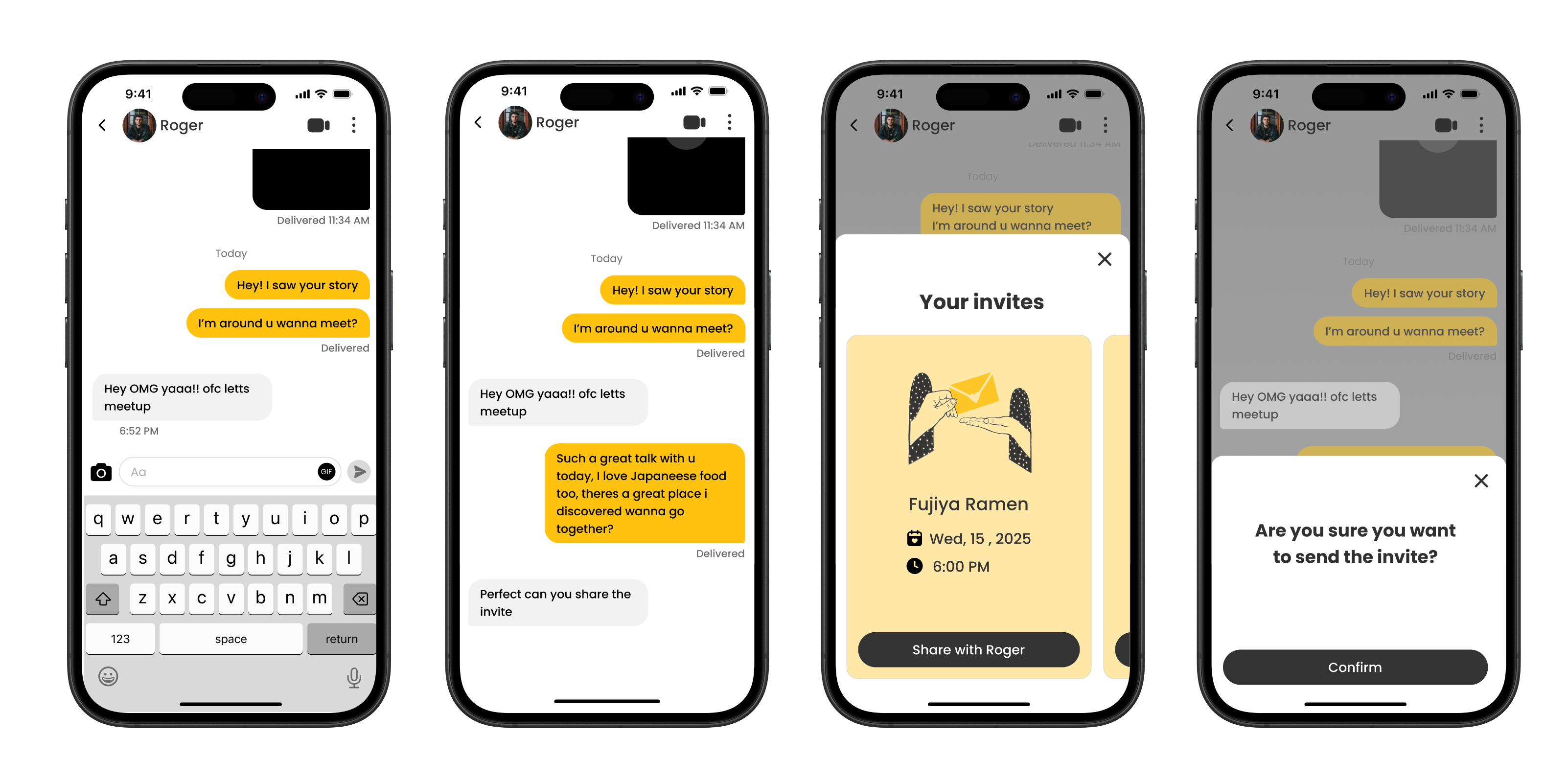
Bumble Story is a dynamic feature that enables users to share real-time moments, discover others contextually, and build more authentic connections.
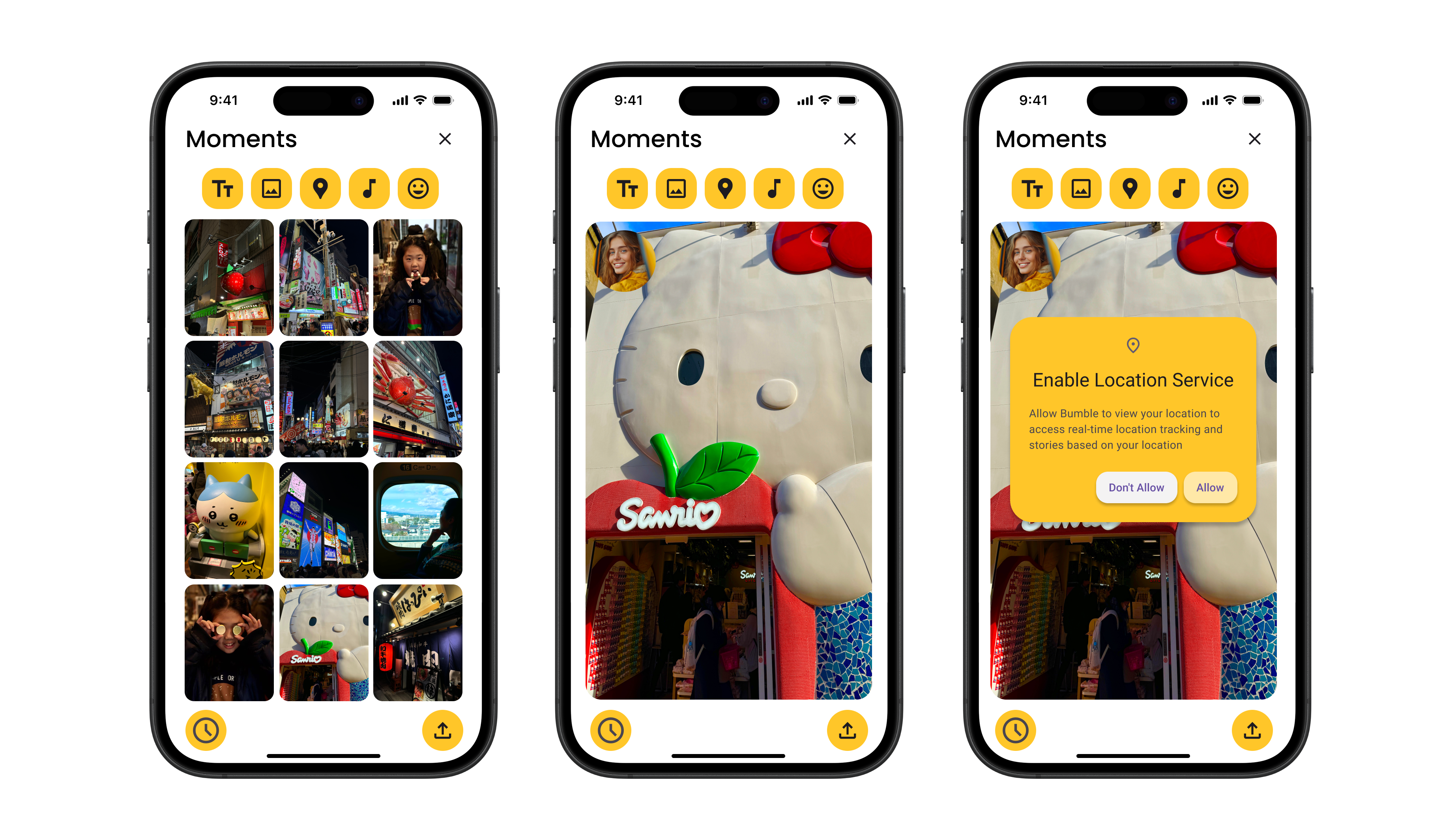
Location Enablement for Contextual Stories
Before tagging a location in their story, users are prompted to enable location services. This ensures that shared stories feel relevant, contextual, and tied to real-world moments, while also supporting discovery of nearby users.
Discovery & Connection
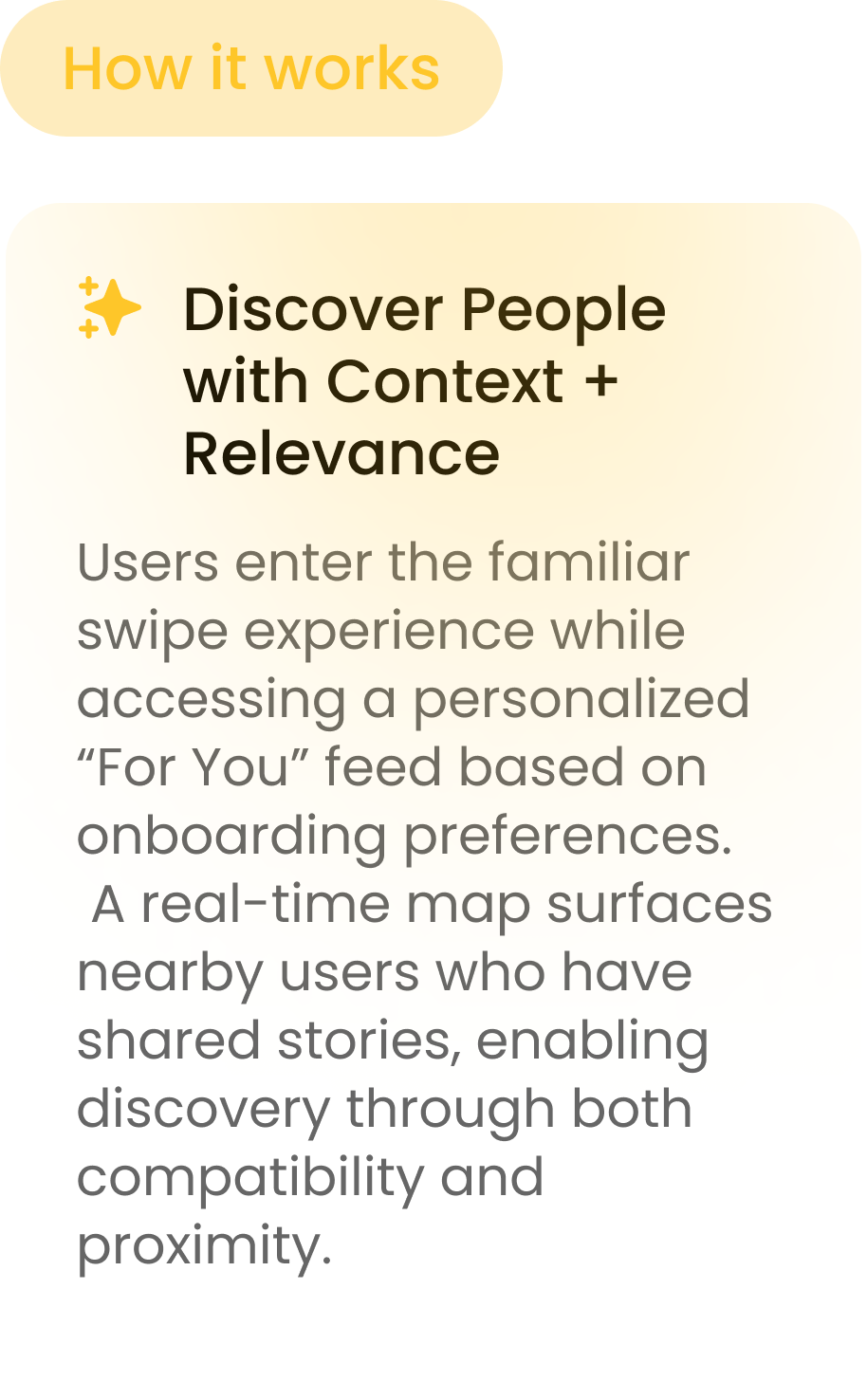
The app notifies users when nearby stories align with their interests. By browsing these authentic snippets, users can decide whether to start a conversation, making matches feel more organic and meaningful.
Reflection
Bumble Story was designed to help users share authentic moments from their daily lives and discover potential matches through real-time storytelling. By combining story-sharing with location-based notifications, the feature creates context for conversations and lowers the barrier to starting meaningful interactions.
Designing Bumble Story pushed me to think about how authenticity and context can transform digital connection. What began as a straightforward brief about proximity alerts evolved into a feature that encourages users to express themselves, explore others’ lives, and connect in ways that feel natural rather than transactional.
One of my biggest takeaways was the importance of designing for value beyond the alert. Instead of simply notifying users that someone is nearby, Bumble Story gives them something real to engage with—a glimpse into someone’s day—making the connection more intentional and less invasive.
This project also strengthened my understanding of engagement design. I learned how small nudges, like encouraging users to post regularly or surfacing nearby stories aligned with their interests, can sustain activity while still supporting Bumble’s mission of empowering people to connect with confidence.